
There’s a quiet but expensive shift happening across India’s industrial corridors. From the manufacturing hubs of Tamil Nadu to the freight zones of Maharashtra, the “cheapest price per watt” era is dead.
In 2026, India’s top EPC contractors and facility planners have realized a hard truth: Buying LEDs based on wattage is like buying a car based only on the size of the fuel tank. It tells you nothing about performance.
The new gold standard? Photometric-First Design.
What is ‘Photometric-First’ (And Why It Scales Revenue)
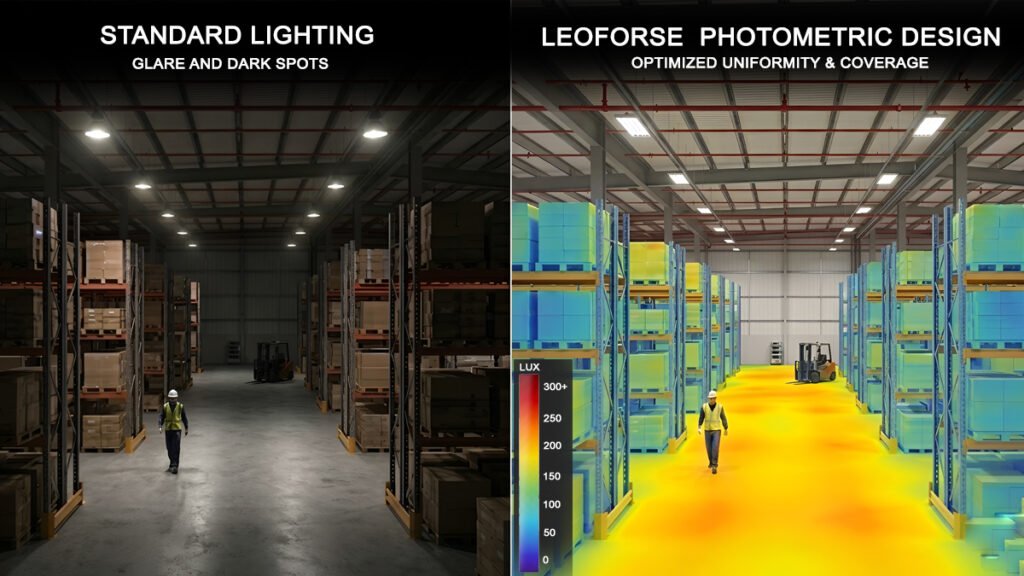
Conventional procurement looks at price and power. Photometric-first design looks at the result. It uses verified IES files and Dialux simulations to map every square meter of your facility before a single rupee is spent.
How this upscales your brand credibility:
- Zero Guesswork: See exact lux levels on the factory floor before installation.
- Uniformity is King: No “hot spots” or “dark zones”- just smooth, safe, and productive light.
- Cost Efficiency: A photometric study often proves you need 20% fewer fixtures to achieve better results than a “guess-and-check” layout.
The “India-Grid” Reality: Why Standard Specs Fail
India’s operating environments are brutal. A light built for a European lab will fail in a Pondicherry summer or a Chennai monsoon. To achieve 2026-level scale, your lighting must survive three things:
- Thermal Stress: Ambient temps hitting 45°C. Without oversized heat sinks, LEDs dim and die within months.
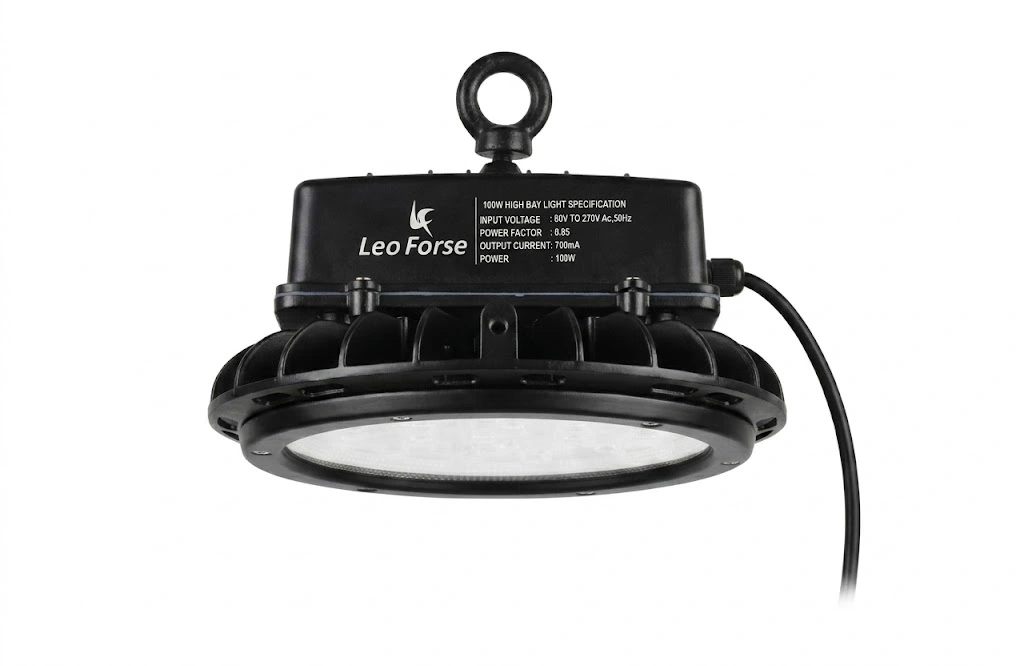
- Grid Volatility: Voltage spikes are a daily reality. This is why 10KV Surge Protection is a baseline requirement for Leoforse.
- The Dust & Humidity Factor: True IP66 protection is mandatory for coastal industrial zones.
| Feature | The Leoforse Way |
| Data Source | Verified IES Files |
| Surge Protection | 10KV Industrial Grade |
| Heat Management | Oversized Aluminum Sinks (50k+ Hours) |
| Compliance | BIS & ISO 9001:2015 Certified |
| Control | Smart-Ready (DALI / 0-10V Dimming) |
Leoforse: Engineering the Scale of Tomorrow
At Leoforse, we don’t just sell lights; we engineer productivity. Built in Puducherry and designed for the specific rigors of the Indian grid, our products represent the bridge between massive infrastructure growth and sustainable revenue.
When you choose a photometric-first approach, you aren’t just “buying lights”- you are investing in safety, scaling your operational uptime, and ensuring your facility reflects the premium quality of your brand.
Expert FAQ: Smart Lighting in 2026
Q: What is a Dialux simulation and why do I need one before buying industrial lighting?
Dialux is professional lighting design software that uses photometric data (IES files) to simulate real lux levels, uniformity, and glare in your specific space. It eliminates guesswork and provides the technical evidence base needed for client and consultant approvals.
Q: What does 10KV surge protection mean for an industrial LED light?
It indicates the voltage spike a driver can absorb without failure. 10KV is significantly higher than standard fixtures and is engineered specifically for Indian grid environments where heavy machinery and power instability create high transient voltage events.
Q: What is an IES file and should I ask for it?
An IES file is a standardized data file describing how a luminaire distributes light. Any serious manufacturer must supply these. If they cannot, their products cannot be accurately simulated—meaning your lux specifications cannot be verified before installation.
Q: Is BIS certification mandatory for infrastructure projects?
Yes. BIS certification is mandated for most industrial and government projects. For private sector projects, it supports quality management compliance and safety audits.
Join the Conversation
“If you audited your facility today, would you find ‘light’ or would you find ‘dark spots and glare’ that are slowing down your team?”
Drop a comment below: Have you ever had an LED fixture fail due to a voltage spike, or are you currently planning a transition to a Smart Warehouse? Let’s discuss the challenges of Indian grid stability.
Conclusion: Precision is the New Standard
The shift to photometric-first lighting isn’t just a technical trend—it’s a business strategy. In a world where every percentage of efficiency counts toward your bottom line, precision-engineered lighting is the invisible engine of growth. Don’t settle for “bright enough.” Demand the data.
Ready to see your facility in a new light?
0 Comments